
Trading
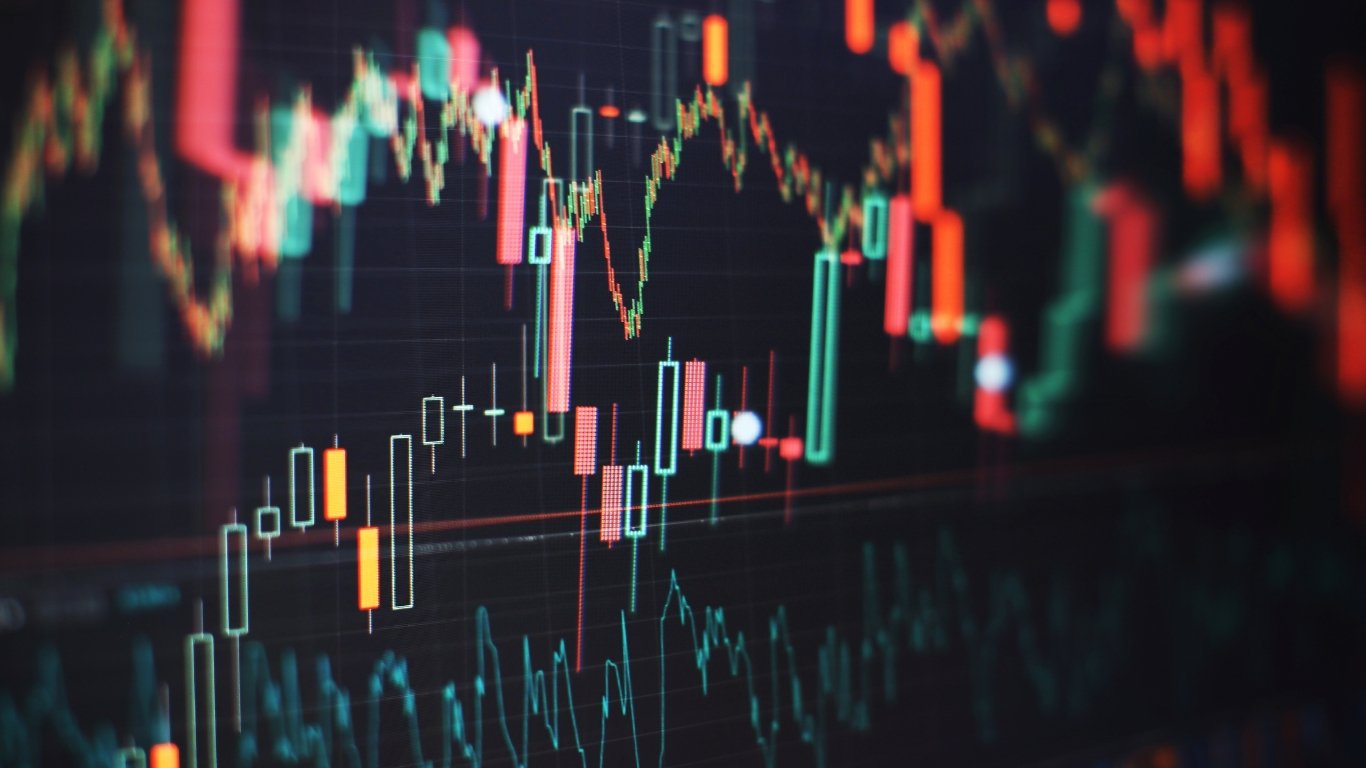
Trading is the buying and selling of securities, such as stocks, bonds, currencies, commodities, and derivatives, with the goal of making a profit. Traders can include individuals, institutional investors, and financial institutions.
Trading differs from traditional investing mainly in its short-term focus, contrasting with the long-term perspective of traditional investing.
In the stock market, trading is common as people buy and sell shares of listed companies. Share prices fluctuate constantly, giving traders the opportunity to choose the right moment to make a profit.
In simple terms, trading refers to the buying and selling of stocks, bonds, commodities, currencies, or other financial securities for a short period to earn profits. The main difference between trading and traditional investing is the former’s short-term approach compared to the long-term horizon of the latter.
Trading is mostly prevalent in the stock market as numerous people buy and sell shares of listed entities. The price of these shares changes every second and a trader can pick a favourable direction to make a gain.
You can trade a wide variety of financial assets and markets which include:
While there are various instruments to trade, it's essential to recognise that trading carries inherent risks. The primary goal is to make a profit on the basis of market's movements. However, it's crucial to exercise risk management to avoid unexpected losses, as trading can be volatile and unpredictable.
Listed below are the major types of trading strategies prevalent in the market.
Stock trading in India is the buying and selling of shares of a listed entity in one of the leading stock exchanges like the National Stock Exchange (NSE) and Bombay Stock Exchange (BSE).
The capital market in India consists of two major segments: primary market and secondary market. On the primary market, private companies (who became public )can issue securities directly to the public to raise funds through a public offering. These are of two types: Initial Public Offering (IPO) and Follow-on Public Offering (FPO).
Once the IPO is completed, all shares of a company are listed in the secondary market, where investors can freely buy and sell stocks and other securities. In India, people are required to open a Demat and trading account with a stockbroker to hold and trade shares.
Whenever there is a purchase request with the broker, it gets passed on to the respective stock exchange. Here, the exchange matches a buy order with an equivalent quantity of a sell order of the same stock. Following this, a transaction takes place where cash and securities are exchanged.
Online trading is the process where people can buy and sell shares electronically. To do this, one must have a Demat account to hold stocks and other securities in the digital format and a trading account with a SEBI-registered broker to place buy and sell orders.
Furthermore, one must link his/ her bank account to receive and send amount for purchasing/ selling securities.
Trading stocks and other securities offer several benefits that make it an attractive option for investors:
Here is a comparison between online trading and offline trading in India:
The practice of trading in India is growing at an exponential pace as evidenced by the growth of Demat and trading accounts with various stockbrokers. Hopefully, this article has served the purpose well for those who are looking forward to starting trading on the stock market.

Basics of stock market fundamental analysis basic types of traders & trading styles candlestick patterns.
Chartpatterns support & resistance identifying trends breakouts/reversals/retests indicators & oscillators
Dilsukhnagar, above KLM Shopping Mall 4th floor, Hyd
+91 76718 17201
hykinoverseas@gmail.com
Firstly, we are pleased to announce that our expansion plans are well underway, with new offices opening in key locations across the world. This will enable us to better serve our clients and partners, and further strengthen our global presence.
© Hykin Overseas. All Rights Reserved. Designed by 2023