Study

Studying abroad can be a life-changing experience. It offers the opportunity to immerse oneself in a new culture, learn a new language, and gain a unique perspective on the world. Additionally, studying abroad can enhance one's academic and professional prospects by providing access to top-notch educational institutions and networking opportunities. However, it is important to carefully research and plan for a study abroad experience to ensure a successful and safe journey. Factors to consider include the destination country's culture, language, safety, and visa requirements, as well as the academic program and cost. With proper preparation and an open mind, studying abroad can be an incredibly rewarding adventure that broadens one's horizons and enriches one's life.
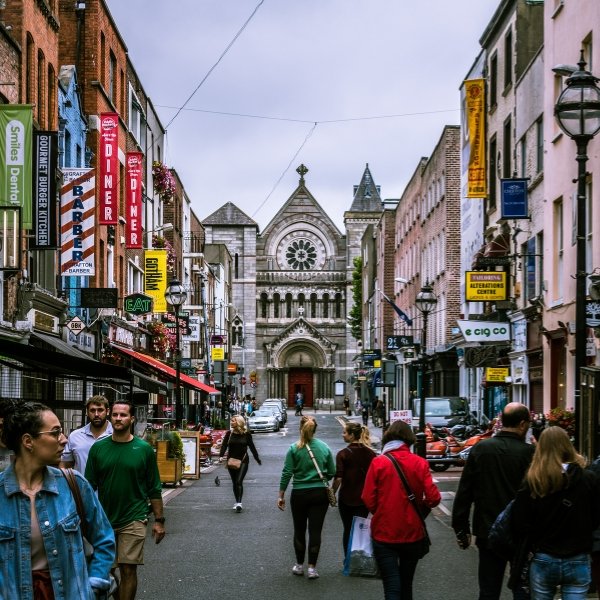
An island in the North Atlantic, Ireland is separated from Great Britain by the North Channel. Each year, the Irish government invests €728 million in higher education institutions. This allows Ireland to have one of the best higher education systems in the world. University in Ireland would be a great choice for any international student.
With many internationally ranked institutions, Ireland is a popular choice for students from around the world. The country has been consistently acknowledged as a safe and peaceful city in world rankings, which is complemented by the welcoming nature of the Irish people.
Higher education is provided by different types of institutions. These are universities, colleges of education and institutes of technology. All of the Irish universities are public and therefore state-funded. Five of Ireland’s universities are in the 2023 QS World University Rankings top 500. The highest ranked of these is Trinity College Dublin – University of Dublin, which is placed at 98th. The next highest ranked is the University College Dublin, which is placed at =181st.
The academic year observed in Ireland is similar to other European countries, and generally runs from September through to June/July depending on the examination period. There are courses offered at the traditional levels of study. These include bachelors, masters and doctoral, as well as diplomas and other types.
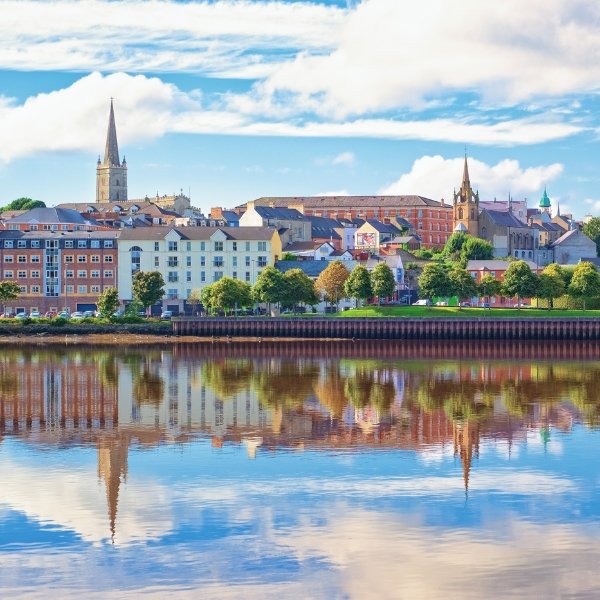
Located to the west of Great Britain and east of Canada and the USA, Ireland is an island nation with a population of over 6.5 million people. This makes it the second most populous island in Europe. Whilst Ireland is one single piece of land, it is politically divided into two areas. These are the Republic of Ireland (referred to sometimes as just Ireland) and Northern Ireland, which is part of the United Kingdom. This division came after many disagreements and is still a topic of political conversation today. Despite the scarring still seen across Ireland, both parts are beautiful and welcoming.
Human presence in Ireland dates back over 12,500 years ago to 10,500 BCE. Since then, there has been a constant battle over who rules the island. Located in Ireland are three UNESCO World Heritage Sites, including the Giant’s Causeway. Dublin is the most heavily touristy area and has many attractions, such as Book of Kells and the Guinness Storehouse.
The culture in Ireland is heavily influenced by religion and the Gaelic and Celtic history. Religion has played a significant role in the history of Ireland, and has caused many disagreements. Famously, Northern Ireland and the Republic of Ireland have different majority religions; Protestant and Catholic. Since the 20th century, you can find influences of Irish culture worldwide, including Irish pubs and food.
Ireland uses the Euro (€) as its currency.
The tuition fees you will pay in Ireland will vary depending on where you choose to study and where you are from. Ireland operates a Free Fees Initiative for full-time undergraduate study. If you are an EU student studying at a public university, you will not pay tuition fees. If you are an EU student not studying at a public university or studying a postgraduate programme, you will have to pay fees. Even if you are not required to pay tuition fees, you will likely have to pay a registration fee of around €3,000. If you are from anywhere else in the world, you will need to pay fees no matter what level of study you are taking and where you are studying. On average you should expect to pay between €5,000 and €10,000 per year. You may be eligible for a scholarship to help finance your studies, check with your chosen institution for information.

In terms of living costs, Ireland is very similar to other European countries. If you choose to live in a bigger city, you will pay more than smaller cities and towns. On average, it is recommended that you budget for between €500 and €800 per month. This accounts for accommodation, groceries and travel. Another cost that students need to consider is health insurance. If you are an EHIC card holder, you will be able to access any healthcare you require for free. If you are not an EHIC card holder, you will need to ensure you have valid health insurance. If you already have a policy in your home country, you will need to make sure it is valid in Ireland. If you do not have insurance already, you will need to purchase a policy that will cover you for the duration of your studies. If you require guidance about health insurance, contact your institution.
Dilsukhnagar, above KLM Shopping Mall 4th floor, Hyd
+91 76718 17201
hykinoverseas@gmail.com
Firstly, we are pleased to announce that our expansion plans are well underway, with new offices opening in key locations across the world. This will enable us to better serve our clients and partners, and further strengthen our global presence.
© Hykin Overseas. All Rights Reserved. Designed by 2023